
Battle of Trafalgar
What was it?
The Battle of Trafalgar was a naval engagement in the Napoleonic Wars that took place on October 21st, 1805, and the battle occurred west of Cape Trafalgar, Spain. Admiral Horatio Nelson commanded the British fleet of 27 ships, and there is something truly fascinating about how he commanded these 27 ships against the 33 of the French and Spanish — and had nine times fewer casualties!
What was so fascinating?
The fascinating thing about this naval battle was that Admiral Nelson had established British naval supremacy for over a hundred years after this battle, and that's why it's extremely significant. Admiral Nelson broke from traditional naval tactics and encouraged individual officers to think for themselves, leading to the decisive victory. He planned to advance on the Franco-Spanish fleets in two divisions to break their line and destroy them, abandoning the traditionally rigid tactics of fighting in line of battle. He also had a famous signal, England expects that every man will do his duty, and this inspired his fleet to victory. His death during the battle, even though it ensured British safety from invasion, added a layer of tragedy and cemented his status as a national hero. Nelson's success in battle combined with humanity as a commander raised Nelson to a god-like status in his lifetime.
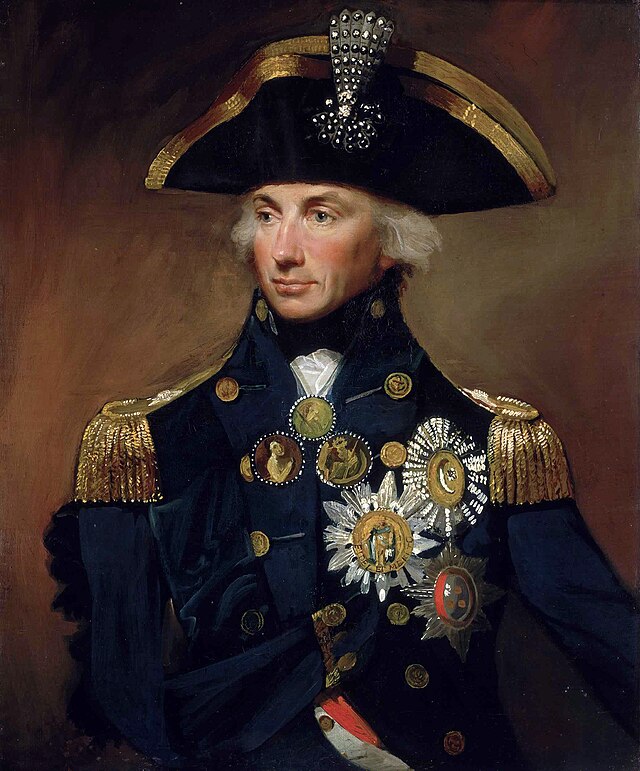
Admiral Horatio Nelson
What did he do that was so special?
He used a variety of tactics that broke free from the rigid traditional ones, annd instead had his officers think for themselves, alongside using a 2 division tactic to destroy the Franco-Spanish fleet. This led to him decisively declaring victory and ensuring the British Isles retained naval supremacy for the next century. His signature tactic involved concentrating firepower on a section of the enemy fleet to overwhelm it decisively.